

You've Saved Over $1 Million. So Why Does Retirement Still Feel Uncertain?
Key Takeaways
- Having $1 million or more saved doesn't automatically translate into confidence about spending it.
- The uncertainty most retirees feel comes from not having a clear plan for turning savings into income.
- Knowing how much you can spend each year, and how to withdraw from your accounts, gives you permission to actually enjoy what you've built.
- A written income and withdrawal plan replaces guesswork with a number you can trust.
For as long as you can remember, $1 million was the number. Hit it, and your retirement is set.
Now you've hit it, and maybe you've even passed it by a healthy margin.
And yet, you still find yourself glancing at your account balance over morning coffee. You still agonize over the numbers in your head before booking a trip you can clearly afford.
You might tell yourself it's just a leftover habit from decades in saving mode. But now, it’s doubt.
And at this stage, that doubt usually has little to do with
how much
you have.
You Have the Savings, Now You Need the Spending Plan
Most financial advice aimed at building wealth stops the minute you reach your goal.
Save more, invest wisely, avoid debt, rinse and repeat.
But how are you supposed to turn a lump sum into a paycheck that lasts 20 or 30 years?
A lot of people find themselves in that spot. They’ve built wealth, upwards of a million dollars, but they’re left asking:
“How much can I spend in my retirement?”
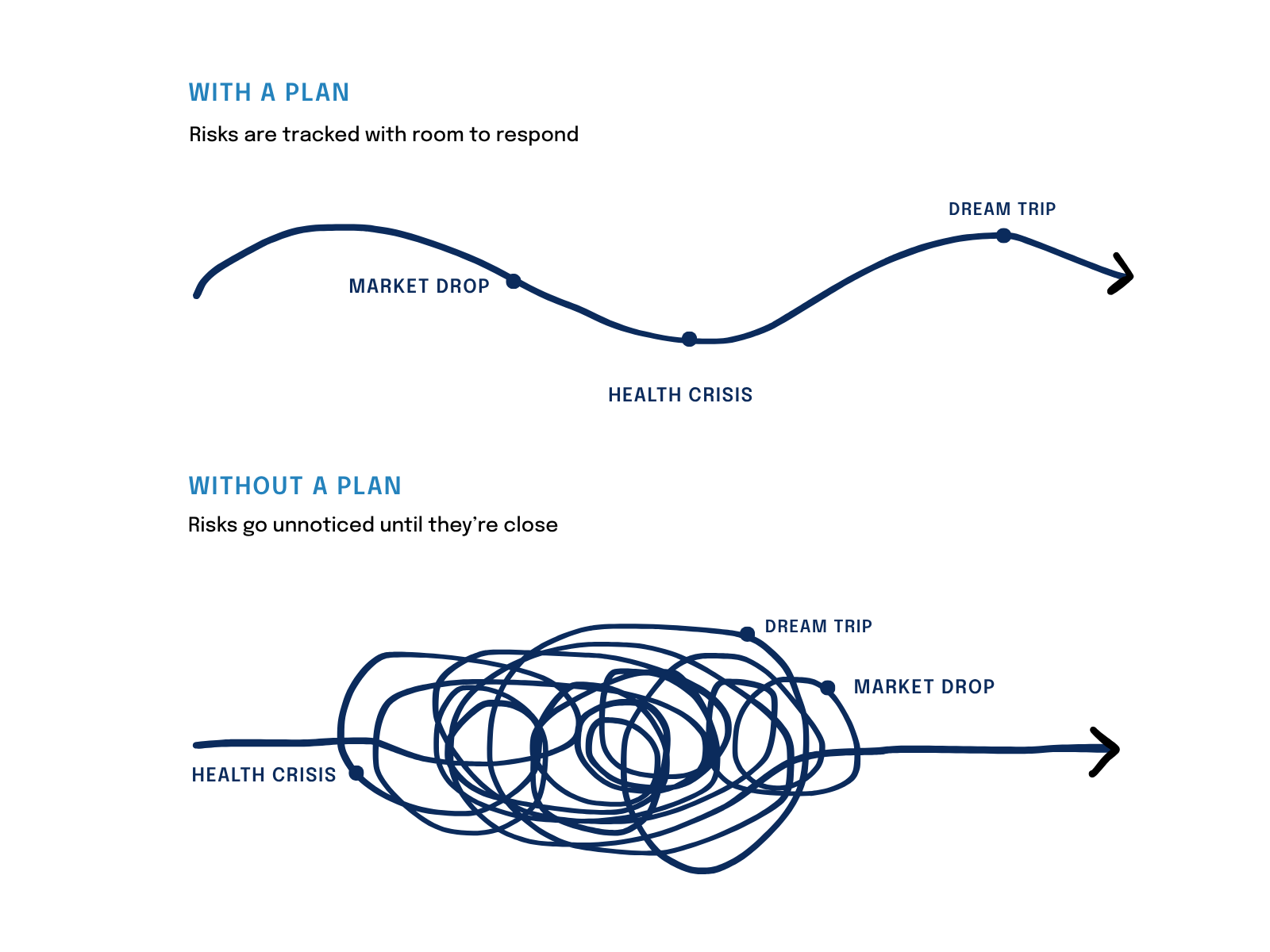
Without a clear answer, the mind fills in the blanks with worst-case scenarios. Risks appear out of nowhere, leaving you rushed, stressed, and unsure if your savings can absorb the hit.
A market drop feels like the beginning of the end, and any big purchase feels reckless.
Why Big Numbers Don’t Create Confidence
A $1 million portfolio can support very different lifestyles depending on your spending needs, when you plan to take out Social Security, whether you have a pension, and how your accounts are taxed.
That's why the number in your account, on its own, was never going to give you the peace you want. The target alone doesn’t tell you whether it holds up once life starts throwing curveballs.
What
settles
that uneasy feeling is knowing:
- How much you can withdraw each year without jeopardizing your long-term security
- Which accounts to pull from first, and how to withdraw from retirement accounts in a way that keeps your tax bill manageable
- How your spending plan holds up against market fluctuations, not just in good years
- What adjustments you’d make if circumstances changed
Once you have specific answers to those questions, anxiety starts to lose its grip. Market headlines are no longer a personal threat because you know your plan accounts for volatility.
From “I Think I Can Spend This” to
“I Know I Can”
Building a sustainable withdrawal strategy starts with a clear picture of your expenses, both predictable and one-off (like travel or a new roof).
From there, look at all income sources — Social Security, pension income, and withdrawals (including eventual RMDs) from your investment accounts. They all need to coordinate with one another.
Plus, the order you pull from your taxable, tax-deferred, and Roth accounts affects Medicare premiums and your tax bracket each year of retirement.
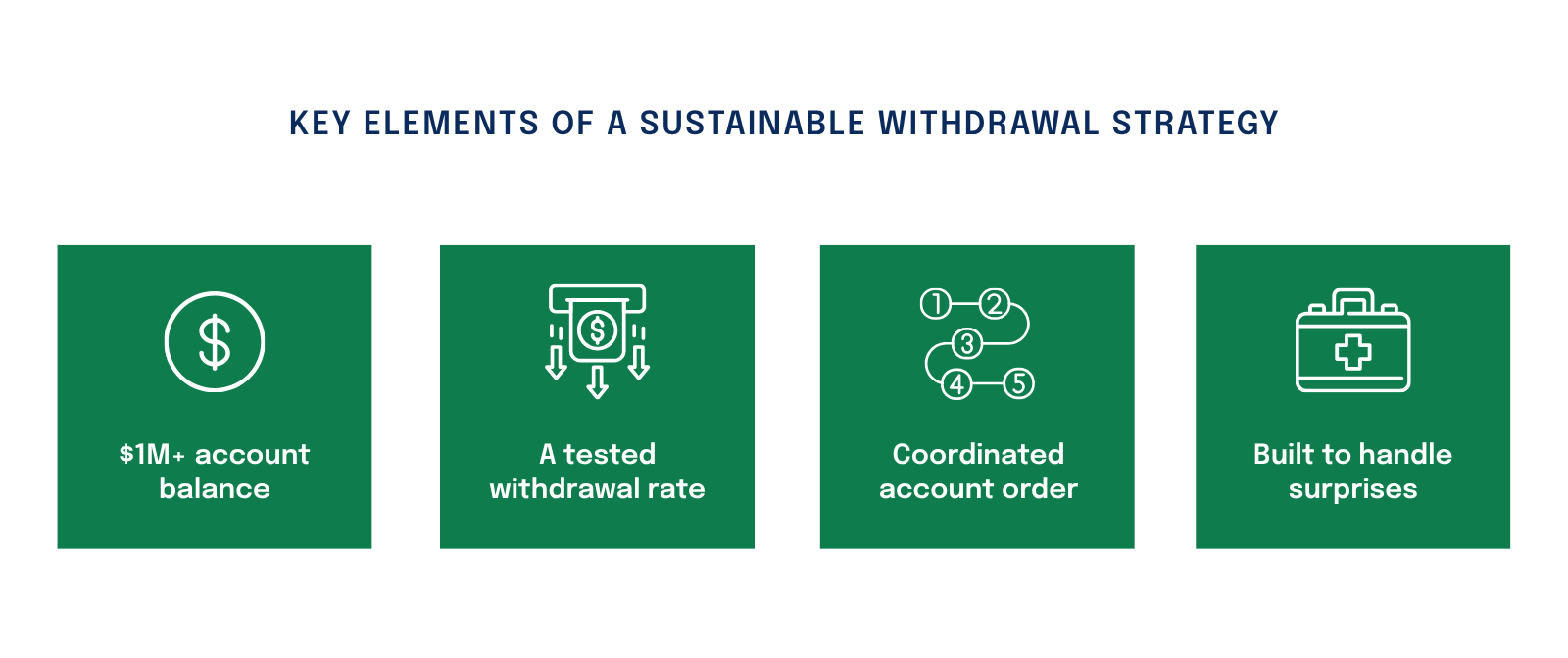
It also means stress-testing the plan. What happens if the market drops 20% in year two of your retirement? What if you live to 95 instead of 85?
A basic stress test looks at these scenarios together, not one at a time:
- A market shock in the early years. Model a significant portfolio decline in year one or two, before any recovery, and see whether your planned withdrawal still holds without permanently shrinking your future income.
- A longer time horizon. Run the plan out to 95 or 100, not just an average life expectancy.
- A large, unplanned expense. Add a big one-time cost, a health event, a home repair, in a random year, and check whether the plan can absorb it without a lasting change to your lifestyle.
A plan that only works in the best-case scenario isn't much of a plan.
Seeing it hold up under pressure is what helps relieve real anxiety.
This is the planning approach we specialize in for clients who’ve reached this stage — helping people who already have $1 million+ use it with confidence.
For our clients who’ve gone through this planning process, the change is powerful.
They’re booking once-in-a-lifetime trips without second-guessing, adding to grandkids’ college funds without worrying they’ll regret it, and checking their accounts with curiosity, not dread.
They're no longer hoping they have enough. Instead, they have a specific, tested number. They know what they can spend, where the money comes from, and what they’ll do if things change.
You spent decades building this.
You don’t have to spend the next twenty years being afraid to use it.
A Few Places to Start This Week
- Estimate what it actually costs to support your lifestyle each year. Include your recurring living expenses, taxes, travel, charitable giving, and the occasional large expenses that don’t happen every month.
- List every income source you'll have in retirement, and when each one starts: Social Security, any pension, RMDs, and portfolio withdrawals.
- Ask whether your current plan has been stress-tested against a market drop, a longer lifespan, and a large unplanned expense, together, not separately.
If you've reached $1 million or more in retirement savings but haven't mapped out a clear spending and withdrawal plan, we'd love to help you build one.
Reach out to us anytime at info@fivepinewealth.com or call 877.333.1015 to talk through what this could look like for you.
Frequently Asked Questions (FAQs)
Q: Is $1 million really enough to retire comfortably?
A: For many people, yes, but "enough" depends far more on your spending needs and other income sources than on the size of the account itself. Two retirees with the same balance can have very different outcomes depending on their withdrawal strategies, tax planning, and expense structures.
Q: What's "sequence of returns risk," and why does it matter more right after I retire?
A: It's the risk that a market downturn in your first few years of retirement does more damage than the same downturn later on, because you're withdrawing from a shrinking account instead of a growing one. A withdrawal plan should account for this by having a strategy to draw less, or from different accounts if a downturn hits early.
Q: How often should I revisit my spending plan once it's in place?
A: At least once a year, and any time something significant changes: a market move well outside the ordinary, a health event, a change in Social Security timing, or a shift in your spending needs. Your retirement plan is meant to be checked and adjusted as your actual situation unfolds over the next 20 to 30 years.
Further Reading
Go deeper on this topic with these articles:
↪
“Which Account Do I Pull From First?” A Guide to Smarter Retirement Withdrawals
↪ When Saving Money Starts Getting in the Way of Living
↪
The Portfolio Decisions That Matter 10 Years Before Retirement
Join Our Newsletter
Plan smarter with our monthly financial tips + insights